
Hey, you’ve probably sat there, staring at your screen, watching a dealer shuffle real cards in a studio somewhere. The thought crosses your mind: is this actually real, or am I just watching a very good loop? It’s a fair question. Live dealer casinos promised to bridge the gap—bringing that gritty, authentic casino floor energy right into your living room without the smoke or the awkward small talk. But the machinery behind that promise? That’s where things get messy and fascinating.
I’ve spent years studying these systems, peeling back the layers of slick interfaces and HD streams to see what actually makes them tick. It’s not magic. It’s a chaotic ballet of cameras, sensors, and software all trying to sync faster than your brain can process. This article isn’t about selling you on the glitz. It’s about exposing the hidden gears—the real-time streaming tech, the dealer rigging (or not), and the silent algorithms keeping everything from falling apart. We’ll walk through the hardware, the software, and the human element that makes a live dealer casino feel both electric and, honestly, a little staged.
What Is a Live Dealer Casino?
Think of a live dealer casino as the bridge between a brick-and-mortar gambling hall and your couch. It’s an online platform that streams real tables with actual human dealers—not a soulless algorithm. You’re watching a physical deck get shuffled, a real wheel spin, or a genuine dealer flip cards, all in real time via a live stream. You join through a digital seat, but the action happening on screen is undeniably physical. It’s the closest thing to stepping onto a casino floor without putting on pants.
To put it bluntly, here’s the breakdown:
- RNG-based online casinos: Everything runs on a random number generator. No human touch. The software decides the outcome. Fast, but sterile.
- Live dealer casinos: Real tables, human dealers, physical cards or wheels. The result is determined by what actually happens in the studio.
- Land-based casinos: You are physically there. Crowded, smoky, requires travel. Live dealer gives you that atmosphere without leaving home.
Popular examples? Live blackjack where you watch the dealer burn a card and turn over a 21. Live roulette where you see the ball bounce. It’s gambling with a heartbeat.
How It Differs From Regular Online Casinos
The core difference is trust vs. code. A regular online casino uses a random number generator to create virtual spins or card draws—you never see a physical object move. With live dealer, you witness a dealer shuffle a real deck or spin a physical wheel. That transparency matters. When you see a dealer shuffle, you know it’s real. No hidden algorithm, just honest physics. RNG can feel like a black box; a live table feels like a game.
The Technology Behind the Stream
Behind every smooth live dealer table is a surprisingly complex pipeline that transforms real-world action into digital ones and zeros. Think of the whole setup as a miniature TV broadcast studio designed for one purpose: getting the game to you without any hiccups. Cameras capture every angle—from the dealer’s hands to the card peek device—while the audio picks up the shuffle and chip clatter. But that raw feed is useless until it’s processed. That’s where the real tech kicks in. The typical latency you’ll see? Between 1 and 3 seconds. Why that gap? Because the system has to encode, transmit, decode, and then display. It’s not a bug—it’s the price of authenticity. Without that tiny delay, glitches and frame drops would ruin the experience. And it’s not just one camera. Modern live studios use multi-camera streams that switch angles based on game state. The result: you feel like you’re leaning over the rail, even if you’re in your pajamas.
The Studio and Camera Setup
You’ll often see a wide shot and a close-up of the cards, plus a dedicated dealer cam. That’s standard. Providers like Evolution or Playtech build whole studios with dedicated tables for VIP players or crazy game shows like Lightning Roulette. Each table is lit like a film set—shadowless, even lighting so the OCR doesn’t get confused. Cameras are mounted on robotic arms or fixed in the ceiling to catch every angle. For high-stakes games, you might even spot a camera pointed at the shoe from below. That’s to verify the card peek.
Optical Character Recognition (OCR)
OCR is the silent brain behind the magic. When the dealer reveals a Queen of Hearts, the system doesn’t rely on some human typing it in—cameras read the suit and rank directly from the card’s printed ink, then convert that image into a digital signal in milliseconds. It works because the cards have special high-contrast markings or tiny codes that OCR software recognizes instantly. The data gets sent to the game server, and your screen updates with the correct bet outcome before the dealer even moves the card away. Modern OCR reads at sub-100ms speeds, so the gap between reality and your display is nearly imperceptible.
The Game Control Unit (GCU) and Streaming
Every live dealer table has a Game Control Unit—think of it as a broadcaster’s switcher but smaller and dedicated to one table. The GCU collects video from all cameras, mixes it, encodes it, and spits it out to a CDN. That CDN then pushes the stream to you using adaptive bitrate technology. Your internet speed matters here: for a crisp 1080p experience, you need at least 10 Mbps down. If your stream lags, check your connection, not the casino—their GCU is usually running on dedicated fiber. The GCU also syncs all game logic, making sure your bets match the live feed perfectly. One hiccup? Auto-recovery buffers prevent blackouts.
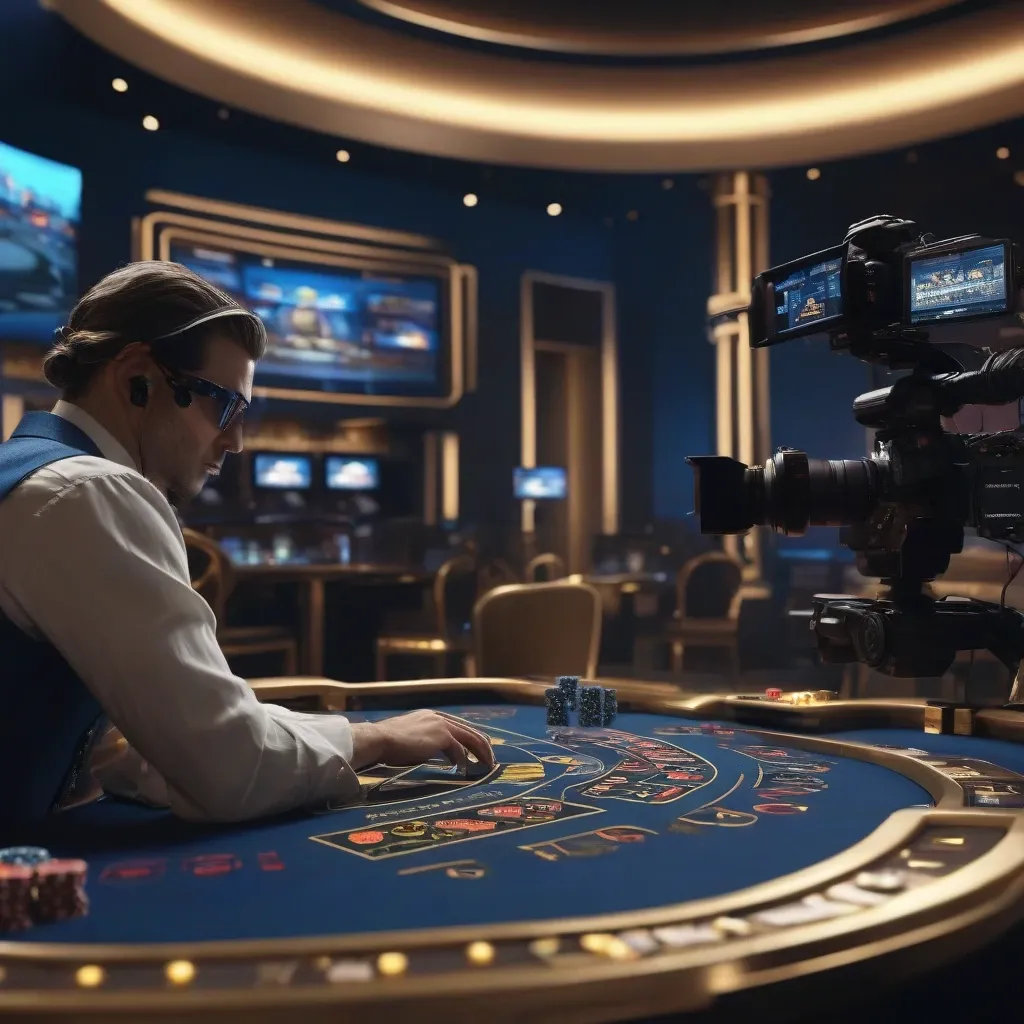
The Human Element: Dealers and Pit Bosses
Live dealers aren’t just card flippers in suits. Top studios put recruits through weeks of grueling training—shuffling accuracy down to the millimeter, handling chat without breaking rhythm, learning to smile through a six-hour shift. It’s a weird blend of Vegas showmanship and surgical precision. Dealers memorize not just game rules but entire protocols: how to hold the cards so the table camera catches every angle, when to slow down for a side bet, and never, ever showing frustration when a player hits on a bust hand. Then there’s the pit boss. Not the guy walking the floor—the one sitting in a darkened control room with a wall of monitors. They scan four or five tables at once, watching for anything off: a dealer’s hesitation, a chip stack that doesn’t match, a player who suddenly bets bigger. One time I watched a dealer flip a card slightly too fast—the pit boss tapped their screen, and the camera zoomed in on the card. Took maybe two seconds to flag and correct. That’s the safety net. Add card-peek cameras and biometric timestamps on every shuffle, and the human layer becomes less about trust and more about transparent, real-time oversight.
Training and Etiquette
Dealer school hammers in the basics: steady eye contact, clear speaking tone, never reacting to a bad beat or a huge win. Shuffling protocols alone take days to perfect—riffle, strip, box, cut—all under a watchful camera. Certification exams test not just speed but composure. A dealer who snaps or rolls their eyes? Gone. The job demands a poker face for everyone else’s game but their own.
How Players Participate and Place Bets
Logging into a live casino lobby is like stepping onto a digital casino floor—except nobody’s jostling your elbow. You browse through game categories, spot a blackjack or roulette table that matches your vibe, then click to enter. The interface loads instantly: a crystal-clear video feed of a real dealer, a virtual felt in front of you, and a row of chip values that look just like the real plastic ones. A countdown timer starts ticking—that’s your bet timer. Tap a chip denomination, then tap the betting area on the screen. The chip drops onto the felt, your balance updates in real time, and you’re in. Don’t let the bet timer rush you – take your time. Most platforms give you 15–30 seconds, plenty to think. Meanwhile, a live chat box sits in the corner. Type a message, and the dealer might respond with a nod or a smile. Results? They update automatically—cards flip, the roulette ball lands, your balance adjusts. It’s seamless, intuitive, and feels oddly social despite the screen between you and the table.
Virtual Seats and Table Limits
Each live table has a limited number of virtual seats—say, a standard blackjack table holds 7 spots. If those are taken, don’t panic; you can join as a ‘viewer’ and watch the action until a seat opens. Table limits vary widely, from low-stakes penny tables to high-roller VIP tables with bets reaching thousands. The interface clearly displays the current minimum and maximum, so you know exactly where you stand before sitting down.
Fairness, Licensing, and Audits
The biggest question on every player’s mind: are live dealer games actually fair? The short answer is yes — if you stick with properly licensed and regularly audited operators. Independent testing agencies like eCOGRA, GLI, and iTech Labs are the gatekeepers of game integrity. They run rigorous checks on the random number generators (RNGs) used for auto-shuffling machines, review actual dealer footage for consistency, and test the entire software stack. A seal from eCOGRA or GLI isn’t just a sticker — it’s a promise that the game has been verified by a third party with no skin in the casino’s profits. Many providers also host a dedicated ‘fairness’ page right on their site, often explaining how the RNG cycles work and how card cuts are randomized. Don’t take their word for it — go find that page.
One persistent myth is that live dealer streams are pre-recorded loops. Let’s kill that now. Watch the live clock displayed on the dealer’s screen — it updates in real time, down to the second. Cross-check it with your phone’s clock if you’re paranoid. Pre-recorded videos can’t sync a live clock with your actual play session, especially when you see the dealer react to bets placed seconds earlier. Reality is messy and unfiltered. That’s exactly why live casino feels slightly chaotic — the dealer might drop a card, laugh at a chat comment, or reshuffle mid-shoe. Fake recordings don’t have that organic flow.
Before you deposit a single cent, always verify the casino’s license. It’s non-negotiable. Look for a respected jurisdiction like the Malta Gaming Authority (MGA), UK Gambling Commission (UKGC), or Curacao eGaming — with a real seal that links to a verification page. If the license info is buried or the ownership is murky, walk away.
How to Verify a Live Casino’s Credentials
Here’s a quick checklist: 1. Scroll to the very bottom of the casino’s homepage. 2. Find the licensing section — usually a footer logo. 3. Click that seal. It should redirect to the regulator’s official site showing the operator’s name and active license number. Red flags? No clickable seal, unclear company ownership, or the regulator isn’t one you recognize. Trust your gut — if it feels off, it probably is.

Common Myths vs. Reality
Myth: The Stream Is Pre-Recorded
Reality: If it were pre-recorded, dealers wouldn’t pause mid‑deal to answer someone’s strange question about their cat. You type, they react – that’s real‑time interaction, not a looped video. A reader once asked me how dealers “know” which cards to deal next. They don’t. It’s pure randomness guided by physics and chance, not a scripted playlist. The deck is shuffled live, the wheel spins right in front of your eyes. Pre‑recording would kill that instant, messy unpredictability – and believe me, the chaos is the whole point.
Myth: The Outcomes Are Still RNG (Hidden Algorithm)
Reality: Some think a computer secretly decides the result, then the dealer just follows along. Nonsense. A physical wheel has no chip. A real deck of cards has no seed value. The ball bounces off slots, cards slide from a shoe – that’s deterministic chaos, not a random number generator. Software can’t fake the way a dealer fumbles or a card flips awkwardly. You’re watching gravity and friction, not a hidden algorithm. Trust the physics, not the conspiracies.
Myth: Dealers Are Robots or Actors
Reality: Robots don’t yawn, spill coffee, or laugh at your dumb joke. Real humans run the tables. They blink, they sweat, they shuffle with human imperfection. That awkward pause when a card sticks? That’s real. If studios wanted to fake it, they’d hire flawless actors – but you’d still spot the lack of genuine reaction. Dealers are people, not puppets. And yes, they can hear you (and sometimes roll their eyes).
Myth: Players Can’t Win Because the House Controls Everything
Reality: The house edge exists – nobody’s denying that – but it doesn’t mean every hand is rigged against you. Variance is a beast. Some nights the dealer busts five times in a row, other nights you can’t catch a break. That’s not manipulation; that’s probability having a laugh. If the games were “fixed” against every player, no one would ever walk away a winner. Yet winners do – and they often come back for more. The system works because it’s fair, not because it’s unbeatable.
Why You Can Trust What You See
Live studios go out of their way to prove legitimacy. Card‑peek cameras show you the dealer’s hole card instantly. A live clock on screen ticks away – pause it and you’ll see the seconds match real time. Multiple angles let you track the wheel’s rotation from start to finish. Every move is visible, every outcome accountable. It’s not about blind faith; it’s about verifiable evidence. Your eyes and the technology together ensure you’re getting the real deal. Trust the process, trust the proof.
Practical Tips for a Better Live Dealer Experience
Getting the most out of live dealer games isn’t just about luck—it’s about smart habits. First, always check the table limits before you sit down. A table that takes 10% of your bankroll on one hand is a fast track to empty pockets. I always set a session budget before logging in, and I stick to it like glue. Bonuses can be tempting, but read the fine print: many live dealer bonuses have high wagering requirements that make them practically worthless. Use them only if the terms are fair.
Internet speed is non-negotiable. Buffering during a hand is the fastest way to tilt. A wired Ethernet connection is best, but if you must use Wi-Fi, switch to the 5GHz band—2.4GHz is too crowded for real-time streaming. Also, learn basic strategy for blackjack and baccarat before playing for real money. Side bets? Avoid them. They look flashy but carry a house edge that can hit 15% or more. If the casino offers free-play versions, practice there first. It’s free education.
Take breaks—live games are immersive, and the constant action can trick you into marathon sessions. I set a timer for 45 minutes, then step away. Finally, a responsible gambling reminder: treat this as entertainment, not a job. Set loss limits before you start, and never chase. The dealer will still be there tomorrow.
What to Look for in a Live Dealer Table
Not all tables are created equal. Beginners should start at low-stakes tables—usually $1–$5 minimums—to learn the pace without pressure. Pay attention to rule variations: Double Exposure Blackjack looks fun, but the house edge is noticeably higher. For roulette, stick to European (single zero) variants, and check if the table offers “en prison” rules. Bet limits matter more than you think—pick a range that fits your bankroll comfortably.
Conclusion
The journey from curiosity to clarity ends right here. You have peeled back the layers of cameras, software, and human precision that make live dealer casinos tick. It is not smoke and mirrors—it is a carefully choreographed dance of technology and authenticity. Every shuffle, every smile, every chip stack is real, controlled by trained professionals in a studio designed for transparency. Now you know exactly what happens behind the camera. The next time you see a dealer smile and say hello, you will appreciate the years of development and training that made that moment possible. If you are ready to try it, pick a licensed operator and enjoy the authentic thrill—but always keep your feet on the ground. Responsible play is part of the real experience too.